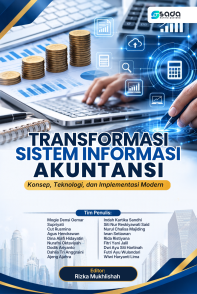
TRANSFORMASI SISTEM INFORMASI AKUNTANSI: Konsep, Teknologi, dan Implementasi Modern
Keywords:
TRANSFORMASI , SISTEM, INFORMASI, AKUNTANSI, Konsep, Teknologi, Implementasi, ModernSynopsis
Di era digital yang bergerak serba cepat, Sistem Informasi Akuntansi (SIA) telah berevolusi dari sekadar alat pembukuan menjadi tulang punggung strategis bagi setiap organisasi. Buku “Transformasi Sistem Informasi Akuntansi: Konsep, Teknologi, dan Implementasi Modern” hadir sebagai panduan komprehensif yang menjembatani pemahaman teoretis tentang SIA dengan realitas implementasi teknologi terkini. Buku ini dirancang untuk menjawab satu pertanyaan mendasar: Bagaimana organisasi dapat memanfaatkan SIA secara maksimal untuk menciptakan nilai di tengah lanskap teknologi yang terus berubah? Melalui pembahasan yang sistematis, buku ini terbagi ke dalam tiga pilar utama: Konsep: Bagian ini menyegarkan kembali pemahaman fundamental tentang SIA, tidak hanya sebagai sistem pencatatan transaksi, tetapi sebagai sistem informasi manajemen yang mendukung pengambilan keputusan. Pembaca akan diajak mendalami kerangka kontrol internal (COSO), tata kelola TI (COBIT), serta peran SIA dalam rantai nilai bisnis dan pelaporan keuangan modern. Teknologi: Bagian ini menyelami dunia teknologi yang mendisrupsi akuntansi. Mulai dari arsitektur sistem berbasis cloud, perangkat lunak ERP (Enterprise Resource Planning), hingga teknologi mutakhir seperti Robotic Process Automation (RPA), Artificial Intelligence (AI), Blockchain, dan Big Data Analytics. Buku ini juga membahas isu krusial seperti keamanan siber dan manajemen risiko digital yang wajib dipahami oleh setiap profesional akuntansi. Implementasi: Bagian ini mengubah teori menjadi aksi. Pembaca akan mempelajari siklus hidup pengembangan sistem (SDLC), metodologi manajemen proyek yang agile, strategi migrasi data, hingga manajemen perubahan organisasi. Dilengkapi dengan studi kasus nyata dan pembahasan tantangan implementasi di lapangan, bagian ini memberikan bekal praktis bagi para manajer, konsultan, dan mahasiswa dalam merancang, mengimplementasikan, dan mengevaluasi SIA modern.
Downloads
Download data is not yet available.
References
Al-Htaybat, K., & von Alberti-Alhtaybat, L. (2017). Big Data And Corporate Reporting: Impacts And Paradoxes. Accounting, Auditing & Accountability Journal, 30(4), 850–873. doi.org.
Batte, B. (2025). COSO Framework in the Digital Age: Strengthening Internal Controls and IT Audits. SSRN Electronic Journal. doi.org.
Bhimani, A. (2020). Digital Data And Management Accounting: Why We Need to Rethink Research Methods, Journal of Management Control, 31(1), pp. 9–23. Available at: https://doi.org/10.1007/s00187-020-00295-z.
Bhimani, A. and Willcocks, L. (2014). Digitisation And The Transformation of Management Accounting, Strategic Finance, 96(2), pp. 32–38.
Cai, C. W. (2021). Triple-Entry Accounting With Blockchain: A Review And Research Agenda. Editorial Volume: Digital Transformation, Strategic Resilience, Cyber Security And Risk Management, 1(1), 1–15. doi.org.
Cram, W. A., Smith, K., & Dadzie, E. A. (2024). Cybersecurity In Accounting Information Systems: Challenges And Solutions. Journal of Accounting And Information Security, 6(2), 112–129. doi.org.
Dai, J., & Vasarhelyi, M. A. (2017). Toward Blockchain-Based Accounting And Assurance. Journal of Information Systems, 31(3), 5–21. doi.org.
Fogarty, T. and Campbell, D. (2024). Accounting Competencies, Digital Intelligence And Work Readiness: Bridging The Skills Gap, Higher Education, Skills And Work-Based Learning, 14(5), pp. 912–930. Available at: https://doi.org/10.1108/HESWBL-01-2024-0012.
Gao, L., Calderon, T. G., & Tang, F. (2020). Public Companies Cybersecurity Risk Disclosures And Internal Control Effectiveness. International Journal of Accounting Information Systems, 38, 100–115. doi.org.
Gotthardt, M. et al. (2020). Current State And Challenges In The Implementation of Smart Robotic Process Automation In Accounting And Auditing Current State And Challenges In The Implementation of Smart Robotic Process Automation In Accounting And Auditing.
Grosu, V. and Cosmulese, C.G. (2026). Business Process Reengineering In Accounting Information Systems: The Cost of Running New Tech With Old Procedures, International Journal of Accounting Information Systems, 53, p. 100712. Available at: https://doi.org/10.1016/j.accinf.2025.100712.
Hammer, M. (2020). Reengineering Work: Don’t Automate, Obliterate, Harvard Business Review, 68(4), pp. 104–112.
Handoko, B. And Lestari, S. (2026). Etika Digital Dalam Akuntansi: Menavigasi Bias Algoritma dan Privasi Data Pada Sistem Informasi Berbasis Kecerdasan Buatan, Jurnal Akuntansi dan Keuangan Indonesia, 23(1), pp. 78–96.
Knudsen, Hans; Metzeling, D. (2021). Accounting Information Systems As A Navigation Radar: Predicting The Future Direction of Modern Business, Journal of Modern Accounting And Business Strategy (Atau Nama Jurnal Terkait Bidang SIA), 14(2), pp. 145–158.
Kocsis, D. (2019). The Human Dimension of Accounting Information Systems: A Literature Review, International Journal of Accounting Information Systems, 34, pp. 45–59. Available at: https://doi.org/10.1016/j.accinf.2019.03.002.
Kroon, N., Alves, M. do C. and Martins, I. (2021). The Impacts of Emerging Technologies on Accountants Role And Skills: Connecting to Open Innovation A Systematic Literature Review, Journal of Open Innovation: Technology, Market, And Complexity, 7(3), p. 163. Available at: https://doi.org/10.3390/joitmc7030163.
Mancini, Daniela; Lamboglia, Rita; Castellano, Nunzio G.; Corsi, K. (2021). Rends of Digital Innovation Applied to Accounting Information And Management Control Systems, In Rends of Digital Innovation Applied to Accounting Information And Management Control Systems. Springer Cham, pp. 15–28.
Mancini, D., Lombardi, R. And Secundo, G. (2021). Trends of Digital Transformation In Accounting: Information Technology, Skills And Education, Meditari Accountancy Research, 29(4), pp. 653–672. Available at: https://doi.org/10.1108/MEDAR-06-2021-1345.
Mautz, R. And Davidson, E. (2024). The “Black Box” of AI In Auditing And Accounting: Maintaining Human Accountability In Automated Decision-Making, Accounting Horizons, 38(2), pp. 115–132. Available at: https://doi.org/10.2308/acch-2023-089.
Palaiovrysiotis, G., Papadopoulos, I. and Vasiliou, D. (2025). Artificial Intelligence Job Replacement Anxiety (AIJRA) And Its Impact on Accountant Readiness, International Journal of Accounting Information Systems, 49, p. 100650. Available at: https://doi.org/10.1016/j.accinf.2024.100650.
Pan, G. and Seow, P.-S. (2020). Preparing Accounting Professionals For The Digital Era: The Role of Data Literacy And Analytical Skills, International Journal of Accounting Information Systems, 37, p. 100451. Available at: https://doi.org/10.1016/j.accinf.2020.100451.
Putra, E. and Rahayu, S. (2026). Accounting Digital Transformation And Resistance In Organizations: Integrating UTAUT2 And Innovation Resistance Theory, Journal of Innovation And Networking, 7(2), pp. 112–128. Available at: https://institutppi.ac.id.
Richins, G., Asthana, S. And Pinsker, R. (2017). Big Data Analytics In Financial Statement Audits, Accounting Horizons, 31(3), pp. 101–114. Available at: https://doi.org/10.2308/acch-51768.
Romney, Marshall B.; Steinbart, P.J. (2020) Accounting Information Systems (15th Edition). London/Harlow: Pearson Education Limited.
Romney, M.B. And Steinbart, P.J. (2020) Accounting Information Systems (15th edition). New York: Pearson.
Saah, F., Dadzie, E. A., Somevi, J. P., Sarpong, P. D., & Korankye, D. O. (2026). Cybersecurity Controls In Accounting Information Systems And Financial Reporting Reliability. Advanced International Journal for Research (AIJFR), 7(3), 55–70. doi.org.
Stanciu, A. And Popa, M. (2025). Ethical Dilemmas of Artificial Intelligence In Accounting Information Systems: Bias, Accountability, And The Black Box Phenomenon, International Journal of Accounting Information Systems, 51, p. 100685. Available at: https://doi.org/10.1016/j.accinf.2025.100685.
Suryono, R. And Astuti, P. (2025). Transformasi Prosedur Akuntansi Pada Era Otomatisasi: Analisis Kritis Terhadap Inefisiensi Proses Bisnis Konvensional, Jurnal Akuntansi dan Auditing Indonesia, 29(1), pp. 34–49.
Tanishia, J. and Dewinda, M.C. (2026). Eksplorasi Dampak dan Tantangan Implementasi Artificial Intelligence (AI) Terhadap Profesi Akuntan: Kesiapan dan Resistensi Perubahan, Jurnal Bisnis Mahasiswa, 6(5), pp. 2290–2308. Available at: https://jurnalbisnismahasiswa.com/index.php/jurnal/article/view/1367.
Warren, C.S. et al. (2018) Accounting Indonesia Adaptation 4 th Edition, Salemba Empat. Jakarta.
Zeng, S. and Li, H. (2025). Automated Auditing Based on Machine Learning: Model Construction And Empirical Analysis, Computer Fraud And Security, 2025(2), pp. 544–561.
Zhang, Chanyuan; Issa, Hussein; Rozario, Andrea M.; Soegaard, J.S. (2023). Robotic Process Automation (RPA) Implementation Case Studies In Accounting: A Beginning to End Perspective, Accounting Horizons, 7(1), pp. 193–217. Available at: https://doi.org/https://doi.org/10.2308/HORIZONS-2021-084.
Published
November 23, 2026
Copyright (c) 2026 Sada Kurnia Pustaka
License

This work is licensed under a Creative Commons Attribution-NonCommercial 4.0 International License.
Details about the available publication format: PDF
PDF