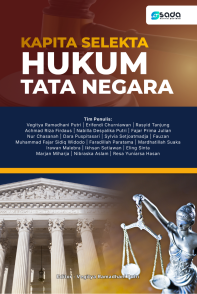
Kapita Selekta Hukum Tata Negara
Keywords:
Kapita , Selekta, Hukum, Tata, NegaraSynopsis
Hukum Tata Negara (HTN) merupakan bidang ilmu yang dinamis, bergerak seiring dengan perkembangan ketatanegaraan, dinamika politik, dan tuntutan reformasi hukum di suatu negara. Di Indonesia, dinamika ini terus melahirkan diskursus yang kaya, mulai dari penguatan sistem presidensial, penataan lembaga negara, pengujian undang-undang, hingga perlindungan hak asasi manusia dan penguatan demokrasi di tingkat lokal maupun nasional. Buku Kapita Selekta Hukum Tata Negara ini hadir sebagai ikhtiar akademik untuk merangkum, membedah, dan menganalisis berbagai isu krusial, kontemporer, serta terpilih (selekta) di seputar hukum ketatanegaraan. Melalui pendekatan teoretis sekaligus praktis, buku ini dirancang untuk memberikan pemahaman yang komprehensif bagi pembaca dalam memetakan persoalan ketatanegaraan yang terjadi saat ini. Secara garis besar, buku ini menyajikan pembahasan yang mendalam mengenai: (1) Pendahuluan: Hukum Tata Negara Kontemporer, (2) Kebijakan Hukum Terbuka dalam Pembentukan Peraturan Perundang-Undangan, (3) Aktivisme Yudisial dalam Putusan Pengujian UU terhadap UUD, (4) Dinamika Pengukuran Kerugian Konstitusional sebagai Dasar Legal Standing Pemohon Judicial Review, (5) Pengaduan Konstitusional dalam Sistem Peradilan di Indonesia, (6) Konstitusionalitas Pemilu Serentak 2024 dan Masa Jabatan Presiden/Wakil Presiden, (7) Regulasi terhadap Quick Count dalam Penyelenggaraan Pemilihan Umum, (8) Regulasi terhadap Konsultan Politik dan Buzzer Politik dalam Pemilihan Umum yang Demokratis, (9) Transformasi Digitalisasi Administrasi Negara dan Tantangan Konstitusional, (10) Konstitusi dan Artificial Intelligence dalam Pemerintahan Modern, (11) Otonomi Daerah dan Tantangan Desentralisasi Asimetris, (12) Dinamika Review dan Preview Peraturan Daerah di Indonesia, (13) Tafsir Demokrasi Ekonomi dalam Konstitusi, (14) Konstitusionalisme Hijau dan Hak atas Lingkungan Hidup, (15) Hak Asasi Manusia dalam Perspektif Konstitusi Digital, (16) Hukum Darurat dan Penegakan Konstitusi di Masa Krisis Nasional, (17) Reformasi Desain Kelembagaan Negara Pasca-Amendemen UUD 1945, (18) Prospek Pembaruan Konstitusi Indonesia: Menuju Demokrasi Substantif, dan (19) Refleksi: Evaluasi Pengajaran Kapita Selekta HTN dan Relevansi Akademik.
Downloads
Download data is not yet available.
References
Abdussamad, Z., Harun, A. A., Muhtar, M. H., Puluhulawa, F. U., Swarianata, V., & Elfikri, N. F. (2024). Constitutional balance: Synchronizing energy and environmental policies with socio-economic mandates. E3S Web of Conferences. https://doi.org/10.1051/e3sconf/202450606006
Abiri, G. (2024). Public Constitutional AI. ArXiv, abs/2406.16696. https://doi.org/10.48550/arxiv.2406.16696
Adepoju, A. S., & Chinonyerem, C. A. (2025). Algorithmic Governance In The United States Public Sector: Designing Transparent Ai Systems For Policy Decision-Making. International Journal of Financial Research and Management Science. https://doi.org/10.70382/tijfrms.v09i7.025
Agustine, O., Harijanti, S., Perwira, I., & Wulandari, W. (2023). Constitutional review of criminal norms: does Indonesia need judicial activism?. The International Journal of Human Rights, 27, 772 - 788. https://doi.org/10.1080/13642987.2023.2185608
Akbar, R., Poetra, M., & Nurjaya, N. (2024). Review Of Regional Tourism Arrangements In Order To Preserve The Local Wisdom Of Indigenous Peoples In Indonesia. Journal of Law and Sustainable Development. https://doi.org/10.55908/sdgs.v12i4.3553
Al., M. M. E. (2023). Constitutional Complaint: A Comparative Study Of The Authority Of The Constitutional Courts Of The Republic Of Indonesia And Croatia. Russian Law Journal. https://doi.org/10.52783/rlj.v11i3s.744
Alaryahiyyah, F. B., Rifki, M., Sauqi, R., Bahri, M., & Fartini, A. (2025). Konflik Kewenangan Antar Lembaga Negara dalam Ketatanegaraan Indonesia. Politika Progresif : Jurnal Hukum, Politik dan Humaniora. https://doi.org/10.62383/progres.v2i3.2436
Allahrakha, N. (2024). Constitutional Safeguards for Digital Rights and Privacy. International Journal of Law and Policy. https://doi.org/10.59022/ijlp.172
Ananda, M. R., & Ikraam, A. (2026). Perlindungan Hak Asasi Manusia Pada Era Pengawasan Digital Oleh Negara: Analisis Hukum Tentang Privasi Vs Keamanan. Jurnal Locus Penelitian dan Pengabdian. https://doi.org/10.58344/locus.v5i1.5459
Andriyani, E. O., & Aminah, A. (2024). Environmentally Friendly Development through the Green Constitution Concept. International Journal of Social Science and Human Research. https://doi.org/10.47191/ijsshr/v7-i06-63
Ardhanariswari, R., Nursetiawan, E., Amalia, S., Cahyani, E. D., & Fadzil, R. M. (2023). Upholding Judicial Independence through the Practice of Judicial Activism in Constitutional Review: A Study by Constitutional Judges. Volksgeist: Jurnal Ilmu Hukum dan Konstitusi. https://doi.org/10.24090/volksgeist.v6i2.9565
Arifin, F., Maarif, I., Astawa, I. G., Abdullah, M., & Bahri, R. (2025). Open legal policy Criteria in the Constitutional Court Decision: An Evaluation and Recommendation. PADJADJARAN Jurnal Ilmu Hukum (Journal of Law). https://doi.org/10.22304/2442-9325.1335
Atmaja, A., Erliyana, A., Jalan, M., Pembangunan, B., Indonesia, E., & Fakultas, S. (2024). Affirming the Democratic Economic System After the Amendment of Article 33 of the Indonesian Constitution: A Critical Legal Studies Perspective. Jurnal Bina Mulia Hukum. https://doi.org/10.23920/jbmh.v8i2.1084
Aulia, T., & Darmadi, N. S. (2026). Reformulation of Judicial Principles in Judicial review Cases Based on Open legal policy by the Constitutional Court. Rule of Law Studies Journal. https://doi.org/10.64780/rolsj.v2i1.213
Baig, A. (2024). Activism Under Certain Circumstances be a Legitimate and Protect the Human Rights Effectively. Wah Academia Journal of Social Sciences. https://doi.org/10.63954/wajss.3.2.40.2024
Barut, A. (2025). Judicial Activism as an Unwritten Source of Law?. Bratislava Law Review. https://doi.org/10.46282/blr.2025.9.spec.1032
Beaussier, T., Caurla, S., Bellon-Maurel, V., & Loiseau, E. (2019). Coupling economic models and environmental assessment methods to support regional policies: A critical review. Journal of Cleaner Production. https://doi.org/10.1016/j.jclepro.2019.01.020
Bertram, D. (2022). ‘For You Will (Still) Be Here Tomorrow’: The Many Lives of Intergenerational Equity. Transnational Environmental Law, 12, 121 - 149. https://doi.org/10.1017/s2047102522000395
Borg-Barthet, J., & Farrington, F. (2024). The EU’s Anti-SLAPP Directive: A Partial Victory for Rule of Law Advocacy in Europe. German Law Journal, 25, 840 - 855. https://doi.org/10.1017/glj.2024.51
Buhaerah, P., Utomo, N., & Elfansuri, E. (2017). Review of Regional Development Planning Based on the Human Rights Principles. Jurnal Bina Praja: Journal of Home Affairs Governance, 9, 295-305. https://doi.org/10.21787/jbp.09.2017.295-305
Busuioc, M. (2020). Accountable Artificial intelligence: Holding Algorithms to Account. Public Administration Review, 81, 825 - 836. https://doi.org/10.1111/puar.13293
Campos, A. (2018). Intergenerational Justice Today. Philosophy Compass, 13, 1-23. https://doi.org/10.1111/phc3.12477
Carneiro, D. (2022). Judicialization of Public Pharmaceutical Care Policies. Medical Research Archives. https://doi.org/10.18103/mra.v10i2.2695
Carvalho, J., Cruz, M., Pereira, K., Rodrigues, T. M. C., & Sampaio, H. V. P. A. (2026). Fundamental Right To Non-Manipulation: A New Frontier Of Personality Rights In The Digital Age. Veredas do Direito. https://doi.org/10.18623/rvd.v23.n4.4737
Celeste, E., & Formici, G. (2024). Constitutionalizing Mass Surveillance in the EU: Civil Society Demands, Judicial Activism, and Legislative Inertia. German Law Journal, 25, 427 - 446. https://doi.org/10.1017/glj.2023.105
Chaturvedi, L. (2026). Digital Constitutionalism: Protecting Rights in the Age of Transnational Data Flows and Artificial intelligence. International Journal of Science, Strategic Management and Technology. https://doi.org/10.55041/ijsmt.v2i5.280
Chen, L., Ye, W., Huo, C., & James, K. (2020). Environmental Regulations, the Industrial Structure, and High-Quality Regional Economic Development: Evidence from China. Land. https://doi.org/10.3390/land9120517
Cheong, B. C. (2025). Bending the Arc of Law: Positivism Meets Climate Change’s Intergenerational Challenge. Transnational Environmental Law, 14, 285 - 311. https://doi.org/10.1017/s2047102525000032
Chung, T. (2025). On the Unconstitutionality of the “Behavior” Component in the Election-Related False Statement Offense under Article 250(1) of the Public Official Election Act. Kyung Hee Law Journal. https://doi.org/10.15539/khlj.60.2.1
Couzigou, I. (2021). The French Legislation Against Digital Information Manipulation in Electoral Campaigns: A Scope Limited by Freedom of Expression. Election Law Journal: Rules, Politics, and Policy, 20, 98 - 115. https://doi.org/10.1089/elj.2021.0001
Dani, M. (2023). Openness, Purposiveness, and the Realignment of the EU and the Democratic and Social Constitutional State. German Law Journal, 24, 1099 - 1126. https://doi.org/10.1017/glj.2023.79
Davis, J., & Żelechowski, Ł. (2023). Bad Faith, Public Policy and Morality: How Open Concepts Shape Trade Mark Protection. IIC - International Review of Intellectual Property and Competition Law, 54, 859 - 890. https://doi.org/10.1007/s40319-023-01350-7
De Fine Licht, K., & De Fine Licht, J. (2020). Artificial intelligence, transparency, and public decision-making. AI & SOCIETY, 35, 917 - 926. https://doi.org/10.1007/s00146-020-00960-w
De Gregorio, G., & Goanta, C. (2020). The Influencer Republic: Monetizing Political Speech on Social Media. German Law Journal, 23, 204 - 225. https://doi.org/10.1017/glj.2022.15
Desai, D. (2014). Constitutional Limits on Surveillance: Associational Freedom in the Age of Data Hoarding. Notre Dame Law Review, 90, 579. https://doi.org/10.2139/ssrn.2404782
Dewi, D. A. G. S., Nugraha, X., & Laurentius, M. E. (2022). The Authority Of The Constitutional Court In Handling Constitutional Complaints: A Comparative Study With Germany And South Korea. Constitutional Law Society. https://doi.org/10.36448/cls.v1i2.28
Dewi, S. R. (2022). Relasi Hukum Dan Moral Dalam Sistem Penegakan Etika Penyelenggara Pemilihan Umum Di Indonesia. Acta Law Journal. https://doi.org/10.32734/alj.v1i1.9898
Diakopoulos, N., & Johnson, D. G. (2020). Anticipating and addressing the ethical implications of deepfakes in the context of elections. New Media & Society, 23, 2072 - 2098. https://doi.org/10.1177/1461444820925811
Dobber, T., Fathaigh, R. Ó., & Borgesius, F. J. Z. (2019). The regulation of online political micro-targeting in Europe. ArXiv, abs/2510.02860. https://doi.org/10.14763/2019.4.1440
Donohue, L. (2023). Surveillance, State Secrets, and the Future of Constitutional Rights. The Supreme Court Review, 2022, 351 - 411. https://doi.org/10.1086/724432
Duff, R. (2012). Towards a Modest Legal Moralism. Criminal Law and Philosophy, 8, 217-235. https://doi.org/10.1007/s11572-012-9191-8
Efata, A. C., & Deny, D. (2026). Constitutional Conflict between Tourism Development and Karst Area Protection in Gunung Kidul: Analysis of Article 33 of the 1945 Constitution of the Republic of Indonesia and the Principles of Sustainable Development. Journal of Law, Politic and Humanities. https://doi.org/10.38035/jlph.v6i3.3149
Elfikri, N. F., Kadir, M. K. K., Muhtar, M. H., Piyo, S., Amrain, F., & Hadju, Z. A. A. (2026). The Indonesian economic Constitution from the perspective of Franz Böhm and Walter Eucken for a just Market. JUSTISI. https://doi.org/10.33506/js.v12i2.4769
Engstrom, D., & Ho, D. E. (2020). Algorithmic Accountability in the Administrative State. Yale Journal on Regulation, 37, 1.
Fadilah, F., & Rahmawati, A. R. (2024). Implementation Of Positive Legislature Of The Constitutional Court In Election Laws As An Anticipation Of Family Interest Conflicts. Journal Social Sciences and Humanioran Review. https://doi.org/10.64578/jsshr.v1i02.37
Faisyah, N., Safa’at, M. A., & Susmayanti, R. (2025). Constitutional Parameters of Judicial Activism in the Indonesian Constitutional Court. International Journal of Business, Law, and Education. https://doi.org/10.56442/ijble.v6i1.1073
Feng, F., Feng, X., Hou, J., Huo, D., & Tang, R. (2020). Effectiveness of regional environmental regulation, economic growth and environmental pollution: An emprical study of the Beijing-Tianjin-Hebei region. 资源科学. https://doi.org/10.18402/resci.2020.12.07
Fernandes, B. G., & Guedes, M. S. B. (2025). Constitutionalism as a Dynamic of Constitutional Power: A Critical Engagement with the Thought of Landau and Albert. Beijing Law Review. https://doi.org/10.4236/blr.2025.163088
Fernando, A., & Mandala, S. (2025). Constitutional Democracy and the Challenges of Election Administration in the Era of Digital Disruption. Greenation International Journal of Law and Social Sciences. https://doi.org/10.38035/gijlss.v3i3.580
Fitriani, E., Thohari, A., Marsal, I., Fatmawati, J. R., Labu, P., Cilandak, J., & S. (2025). Transformasi Paradigma Kebijakan Publik: Integrasi Prinsip Hukum Progresif dalam Pembangunan Hukum Responsif di Indonesia. Khatulistiwa: Jurnal Pendidikan dan Sosial Humaniora. https://doi.org/10.55606/khatulistiwa.v5i2.6298
Gadjiev, K. (2025). Judicial Activism and Judicial Restraint in the Theory of the Evolutive Approach to Law. Journal of Foreign Legislation and Comparative Law. https://doi.org/10.61205/s199132220034852-3
Galvan, N. (2021). Adopting the Cumulative Harm Framework to Address Second-Generation Discrimination. 147–194-147–194. https://doi.org/10.7916/cjrl.v11i1.8017
Giuliani, E. (2024). Making it right: socio-environmental conditionalities in regional industrial policies. Progress in Economic Geography. https://doi.org/10.1016/j.peg.2024.100007
Grover, S. C. (2020). Judicial Activism and the Democratic Rule of Law. https://doi.org/10.1007/978-3-030-35085-7
Gunawan, M., Santos, L., & Flores, J. (2025). Protection of Citizens’ Constitutional Rights in the Digital Era. Rechtsnormen: Journal of Law. https://doi.org/10.70177/rjl.v3i1.2092
Hajdúková, T. (2024). Techniques for Manipulating Public Opinion in the Online Space During an Election Campaign as a Hybrid Threat. Academic Journal of Interdisciplinary Studies. https://doi.org/10.36941/ajis-2024-0002
Hambali, M., Prasetyo, T., Widayati, W., & Ngazis, M. (2022). Feasibility Test Reconstruction of Ethical Enforcement Regulations for Election Organizers Based on the Values of Justice with Dignity. Scholars International Journal of Law, Crime and Justice. https://doi.org/10.36348/sijlcj.2022.v05i01.001
Hapsari, M. A. (2025). The Dimension of Judicial Activism of Incorporating Constitutional Complaint: an Overview on Judicial Independence. Constitutional Review. https://doi.org/10.31078/consrev1124
Hartwig, M. G. (2024). Climate Guardians: Navigating the Future in the 2021 German Climate Verdict and Constitutional Landscape. Politics and Governance. https://doi.org/10.17645/pag.7857
Hasugian, M., Noviya, A., & Author, T. C. (2026). Privacy, Surveillance, and Constitutional Rights in the Digital State. Ipso Jure. https://doi.org/10.62872/1w6a2t71
Heinmaa, T., Wolf, P., Dalke, L.-M., & Neven, M. (2023). Winning Elections the Right Way: Online Political Advertising Rules in Europe and Selected Countries Globally. https://doi.org/10.31752/idea.2023.77
Henman, P. (2020). Improving public services using artificial intelligence: possibilities, pitfalls, governance. Asia Pacific Journal of Public Administration, 42, 209 - 221. https://doi.org/10.1080/23276665.2020.1816188
Hesselink, M. (2022). Reconstituting the Code of Capital: could a progressive European code of private law help us reduce inequality and regain democratic control?. European Law Open, 1, 316 - 343. https://doi.org/10.1017/elo.2022.16
Hidalgo, C. M. A. (2025). Judicial Activism In Constitutional Justice: Comparative Analysis And International Standards. Lex localis - Journal of Local Self-Government. https://doi.org/10.52152/801805
Iancu, B. (2025). Militant Democracy and Rule of Law in Three Paradoxes: The Annulment of the Romanian Presidential Elections. Hague Journal on the Rule of Law. https://doi.org/10.1007/s40803-025-00245-8
Indrastuti, L., & Laksito, F. X. H. B. (2026). Open legal policy in Constitutional Court Decisions: Constitutional Limits and Its Issues in the Indonesian State Administration System. Jembatan Hukum : Kajian ilmu Hukum, Sosial dan Administrasi Negara. https://doi.org/10.62383/jembatan.v3i1.2911
Iqram, M., Husen, L., Hafidz, M., & Razak, A. (2026). The Nature of Democratic Regional Regulation Formation in Regional Government Administration. Journal of Cultural Analysis and Social Change. https://doi.org/10.64753/jcasc.v11i1.4197
Isharyanto, J. E. (2020). Gagasan Konstitusi Ekonomi Indonesia Dalam Kerangka Pasal 33 UUD 1945. https://doi.org/10.36356/hdm.v17i2.1497
Joshi, F. (2025). Digital Privacy vs. State Surveillance: Balancing Fundamental Rights in Cyber Investigations. International Journal For Multidisciplinary Research. https://doi.org/10.36948/ijfmr.2025.v07i05.59306
Judge, E. F., & Korhani, A. M. (2020). Disinformation, Digital Information Equality, and Electoral Integrity. Election Law Journal: Rules, Politics, and Policy, 19, 240 - 261. https://doi.org/10.1089/elj.2019.0566
K., K. (2025). Impact Of Judicial Activism In Deciding PIL. International Journal of Research Publication and Reviews. https://doi.org/10.55248/gengpi.6.0925.3312
Keij, D., & Van Meurs, B. (2023). Responsibility for Future Climate Justice: The Direct Responsibility to Mitigate Structural Injustice for Future Generations. Journal of Applied Philosophy. https://doi.org/10.1111/japp.12674
Kim, N. W. (2024). A Study on automated Administrative Decisions and Due process by Artificial intelligence Algorithms. National Public Law Review. https://doi.org/10.46751/nplak.2024.20.1.73
Kristian, K., Mujhad, M. H., Murhaini, S., & Buana, M. S. (2025). The Ius Constituendum of an Equitable Dispute Resolution Mechanism for Constitutional Complaints. Journal of Progressive Law and Legal Studies. https://doi.org/10.59653/jplls.v3i02.1658
Kurniawati, R. (2023). Buzzer Sebagai Alat Politik Ditinjau Dari Perspektif Penegakan Hukum Di Indonesia. Justicia Sains: Jurnal Ilmu Hukum. https://doi.org/10.24967/jcs.v8i2.2313
Kurunczi, G. (2025). The role of public participation and legal certainty in lawmaking in a special legal order – with particular reference to Central European practice. Frontiers in Political Science. https://doi.org/10.3389/fpos.2025.1568066
Larasati, H., Aeni, I., Febrianti, S. S., & Safitri, T. (2024). Code of Ethics Violations Due to Constitutional Court Decision Number 90/PUU-XXI/2023 Towards the Dynamics of the 2024 Election in Indonesia. Jurnal Hukum In Concreto. https://doi.org/10.35960/inconcreto.v3i2.1484
Lawrence, P. (2023). International Law Must Respond to the Reality of Future Generations: A Reply to Stephen Humphreys. European Journal of International Law. https://doi.org/10.1093/ejil/chad034
Leone, C. (2022). Coding for the 99 per cent? Principles and the preconditions of capital minting. European Law Open, 1, 351 - 362. https://doi.org/10.1017/elo.2022.20
Levin, L. (2023). Intergenerational justice : an evaluation of our moral and legal obligations towards future generations.
Li, C. (2025). AI-Driven Governance: Enhancing Transparency and Accountability in Public Administration. Digital Society & Virtual Governance. https://doi.org/10.6914/dsvg.010101
Li, J., & Wang, X. (2025). Towards high-quality development: The complex role of environmental regulation. PLOS ONE, 20. https://doi.org/10.1371/journal.pone.0312816
Li, Q., Liu, J., & An, S. (2024). Research on the central-local environmental co-governance mechanism based on the central inspection. Environment, Development and Sustainability. https://doi.org/10.1007/s10668-024-05232-x
Lindsey, T. (2018). Filling the Hole in Indonesia’s Constitutional System: Constitutional Courts and the Review of Regulations in a Split Jurisdiction. Constitutional Review. https://doi.org/10.31078/consrev412
Liu, H.-W., Lin, C.-F., & Chen, Y.-J. (2019). Beyond State v Loomis: artificial intelligence, government algorithmization and accountability. Int. J. Law Inf. Technol., 27, 122-141. https://doi.org/10.1093/ijlit/eaz001
Luo, Z., & Rozenas, A. (2018). Strategies of Election Rigging: Trade-Offs, Determinants, and Consequences. Quarterly Journal of Political Science, 13, 1-28. https://doi.org/10.1561/100.00016095
Makhosheva, S., Kandrokova, M., Ivanov, Z., Sabanchiev, A., & Shardan, S. (2021). Formation of mechanisms for state regulation of environmental investment activities in the region. E3S Web of Conferences. https://doi.org/10.1051/e3sconf/202128411011
Manik, E. H. (2025). Kedudukan Hukum Putusan DKPP terhadap Pelanggaran Kode Etik Anggota Bawaslu yang Merangkap sebagai Pengurus Partai Politik. Journal Evidence Of Law. https://doi.org/10.59066/jel.v4i1.1054
Marah, T. S. (2026). Judicial Independence And The Effectiveness Of Constitutional Complaint Systems. Constitutional Review. https://doi.org/10.31078/consrev1212
Mhlanga, L. (2025). Deconstructing Thubakgale: The role of constitutional damages in enforcing the right to adequate housing. South African Journal on Human Rights, 41, 102 - 117. https://doi.org/10.1080/02587203.2025.2604689
Moch, E. (2025). Algorithms as Judges: Constitutional Limits to Automated Decision-Making in Public Administration. East African Journal of Law and Ethics. https://doi.org/10.37284/eajle.8.1.3044
Mohammed, A. A., Khinger, I. K., Khamees, O. A. H., Ziboon, M. F., & Hilfi, T. K. Y. A. (2025). Human rights and environmental justice: A legal framework for sustainable ecosystem management. Environment and Social Psychology. https://doi.org/10.59429/esp.v10i10.3970
Mohsin, M., Bhat, A., Mohsin, S., Mohsin, S., Lyngdoh, J., & Mohsin, S. (2021). Governing Democracy Outside the Law: India's Election Commission and the Challenge of Accountability. Asian Journal of Comparative Law, 16, S85 - S104. https://doi.org/10.1017/asjcl.2021.30
Mokhonchuk, B. S., & Romaniuk, P. (2019). Towards a Legal Framework That Protects Freedom of Expression in Electoral Processes. Baltic Journal of European Studies, 9, 43 - 62. https://doi.org/10.1515/bjes-2019-0021
Mulyawan, A., Faishal, A., Suprapto, S., & Saprudin, S. (2025). Monitoring and Review of Regional Regulations in Indonesia that Ensure Legal Certainty. Journal of Progressive Law and Legal Studies. https://doi.org/10.59653/jplls.v3i02.1754
N, S. J., & N, M. (2025). The Right to Privacy V/S National Security: Examining Media Surveillance Laws in India. International Journal For Multidisciplinary Research. https://doi.org/10.36948/ijfmr.2025.v07i02.40059
Nath, P. (2025). From Restraint to Reform: The Role of Judicial Activism in Addressing Contemporary Legal and Social Challenges. GLS Law Journal. https://doi.org/10.69974/glslawjournal.v7i2.183
Natsir, M. K. K., & Nur, N. C. (2024). Sinergi Antara Prinsip Konstitusi Hijau dan Praktik Demokrasi Hijau Implikasi Hukum untuk Keberlanjutan Lingkungan. Amandemen: Jurnal Ilmu pertahanan, Politik dan Hukum Indonesia. https://doi.org/10.62383/amandemen.v1i4.821
Neta, Y., Budiyono, B., & Firmansyah, A. A. (2021). The Model Of Local Regulation Of The Human Rights Fulfillment Based On Progressive Law. 18-34. https://doi.org/10.33756/jlr.v3i0.7301
Nugroho, A., Pertiwi, M. K., & Wisaksono, P. J. (2023). The Need for A Constitutional Complaint Mechanism for Tax Matters in Indonesia. Constitutional Review. https://doi.org/10.31078/consrev926
Nugroho, B. (2025). Reconstruction of Civil Judicial Activism Limitations: A Juridical Analysis of Ultra Petita Decisions for Legal Certainty and the Principle of Party Autonomy. SIGn Jurnal Hukum. https://doi.org/10.37276/sjh.v7i2.582
Nurita, R. F., S., Adnyana, I. G. N., & D. (2024). Economic Justice Perspective Article 33 Of The Constitution Of The Republic Of Indonesia In 1945 As The Original Representation Of The Indonesian Economy. OIKONOMIA: Journal of Economics and Management Science. https://doi.org/10.59165/oikonomia.v2i1.46
Öberg, J. (2021). Normative justifications of EU criminal law: European public goods and transnational interests. European Law Journal. https://doi.org/10.1111/eulj.12451
Ochi, M. (2025). Reparations to Future Generation before the ICC. Journal of International Criminal Justice. https://doi.org/10.1093/jicj/mqaf023
Özcan, A. S., & Kimya, F. (2023). Executive decrees, omnibus bills, and the politics of abusive constitutionalism in Turkey. Southeast European and Black Sea Studies, 24, 881 - 903. https://doi.org/10.1080/14683857.2023.2231678
Özer, S., Güneş Gülal, A. G., & Polat, Y. (2023). The rule of law in the grip of populist authoritarianism: Hungary and Poland. Politics & Policy. https://doi.org/10.1111/polp.12554
Palilingan, T. N., Setiabudhi, D., & Palilingan, T. K. R. (2019). Environmental Policy, Public Health and Human Rights: Assessing the Regional Regulation on Waste. Hasanuddin Law Review. https://doi.org/10.20956/halrev.v4i3.1413
Pasupuleti, M. K. (2026). Toward Trustworthy Artificial intelligence in Law and Public Administration: Transparency, Accountability and Decision Support. International Journal of Academic and Industrial Research Innovations(IJAIRI). https://doi.org/10.62311/nesx/rp-1-28-30032026
Pazhamalai, S. (2025). Algorithmic Governance And Democratic Values: Evaluating The Impact Of State Use Of Ai On Transparency, Accountability And Civil Liberties. ILE JOURNAL OF GOVERNANCE AND POLICY REVIEW. https://doi.org/10.65393/vwfd5839
Peng, S., Liang, S., Dai, T., & Peng, H. (2024). Exploring the Mechanisms of Regional Environmental Collaborative Legislation in China: Policy Effectiveness, Practical Challenges, and Policy Suggestions. Sustainability. https://doi.org/10.3390/su16103959
Pentney, K., & Shattock, E. (2025). Disinformation and Democracy on the Docket: Reformulating the Approach to Electoral Disinformation under the ECHR. Oxford Journal of Legal Studies, 45, 980 - 1010. https://doi.org/10.1093/ojls/gqaf026
Petrov, J. (2024). How to Detect Abusive Constitutional Practices. European Constitutional Law Review, 20, 191 - 221. https://doi.org/10.1017/s1574019624000142
Purwadi, H., Hermawan, S., Soares, A. A., Németh-Szebeni, Z., & Kusuma, F. I. S. (2024). Resolving the Judiciary Tensions between the Constitutional Court and the Supreme Court of Indonesia. Journal of Indonesian Legal Studies. https://doi.org/10.15294/jils.vol9i1.4635
Quising, J. D. F. (2024). Beyond OPOSA: Courts reinforcing intergenerational equity as customary international law. European Law Journal. https://doi.org/10.1111/eulj.12489
Rahmad, N., & Dewi, M. A. S. (2024). Mahkahmah Konstitusi Sebagai Supremasi Penegakan Etika dan Hukum dalam Masa Pemilu yang Demokratis. JATIJAJAR LAW REVIEW. https://doi.org/10.26753/jlr.v3i1.1419
Rana, A., & Iqbal, A. (2025). Privacy and Surveillance: Legal and Technical Perspectives. UCP Journal of Law & Legal Education. https://doi.org/10.24312/ucp-jlle.03.02.552
Rasyid, A. M., & R. (2018). Economic-Political Dynamics as A Legal Amendments Factor.
Ray, A. (2021). Disinformation, Deepfakes and Democracies: The Need for Legislative Reform. University of New South Wales Law Journal. https://doi.org/10.53637/dels2700
Rb, L. D., & Heliaantoro, H. (2024). Analysis of Natural Resources Contracts Related to Article 33 Paragraph 2 and Paragraph 3 of the 1945 Constitution. Siber Journal of Advanced Multidisciplinary. https://doi.org/10.38035/sjam.v2i2.216
Riley, S. (2016). Architectures of intergenerational justice: Human dignity, international law, and duties to future generations. Journal of Human Rights, 15, 272 - 290. https://doi.org/10.1080/14754835.2015.1106308
Rodríguez, S. (2022). The United States of Surveillance: A Review of America’s Mass Surveillance Laws, Programs, and Oversight. Vol. 3, Iss. 2 (DHSI Conference & Colloquium 2021). https://doi.org/10.21428/f1f23564.f20c77b2
Rowbottom, J. (2020). The Regulation of Third Party Campaigning in UK Elections. The Political Quarterly. https://doi.org/10.1111/1467-923x.12897
Rueda, M. R., & Ruiz, N. A. (2020). Political Agency, Election Quality, and Corruption. The Journal of Politics, 82, 1256 - 1270. https://doi.org/10.1086/708243
Ruslina, E. (2016). Makna Pasal 33 Undang-Undang Dasar 1945 Dalam Pembangunan Hukum Ekonomi Indonesia. Jurnal Konstitusi. https://doi.org/10.31078/jk913
Ruslina, E., Rodiah, S., & Winayanti, N. K. (2020). Cooperative Principles (Partnership-Based Togetherness) as the Legal Basis of Democracy Economic Thinking. 59-63. https://doi.org/10.2991/aebmr.k.200226.012
Saharuddin, S. (2025). Judicial review and Constitutional Court Authority: Comparative Analysis of Indonesia's Constitutional Court and International Best Practices. Proceeding of the International Conference on Law and Human Rights. https://doi.org/10.62383/iclehr.v2i1.48
Saragih, G. M., Nasution, M., & Sihombing, E. N. (2025). Judicial review Oleh Mahkamah Konstitusi: Judicial Activism vs. Judicial Restraint dalam Perspektif Kebebasan Kehakiman. Jurnal Konstitusi. https://doi.org/10.31078/jk2213
Sethi, A., Ullah, H. H., & Naseem, R. M. S. (2025). Surveillance, National Security and the Right to Privacy in the Digital Era. The Critical Review of Social Sciences Studies. https://doi.org/10.59075/gf564d60
Shakti, A. G., Tyas, M. W., & Farid, M. (2023). The Integration of Judicial review in Indonesia. Syiah Kuala Law Journal. https://doi.org/10.24815/sklj.v6i3.26940
Shattock, E. (2021). The electoral commission, disinformation and freedom of expression. Northern Ireland Legal Quarterly. https://doi.org/10.53386/nilq.v71i4.543
Shattock, E. (2022). Free and Informed Elections? Disinformation and Democratic Elections Under Article 3 of Protocol 1 of the ECHR. Human Rights Law Review. https://doi.org/10.1093/hrlr/ngac023
Shrivastava, R., Ramchandra, J. R., Mardikar, M., & Chaturvedi, D. (2026). Digital Dragnets: Constitutional Limits of AI and Drone Surveillance in Drug Enforcement (2026). International Journal of Drug Delivery Technology. https://doi.org/10.25258/ijddt.16.20s.3
Siddiqui,, H. R. (2025). Impersonation And Administrative Misconduct At The Election Commission Of Pakistan. Turkish Journal of Computer and Mathematics Education (TURCOMAT). https://doi.org/10.61841/turcomat.v16i2.15269
Simiyu, M. A. (2022). Freedom of expression and African elections: Mitigating the insidious effect of emerging approaches to addressing the false news threat. African Human Rights Law Journal. https://doi.org/10.17159/1996-2096/2022/v22n1a4
Sonkar, A. (2026). Privacy after Puttaswamy: Constitutional Boundaries of State Data Collection under the Digital Personal Data Protection Act, 2023. London Journal of Research In Computer Science and Technology. https://doi.org/10.34257/ljrcst225917uk
Srinivas, M., & Benjamin, M. (2026). AI Governance And Constitutional Law: Recalibrating Constitutional Frameworks In The Age Of Artificial intelligence. ILE CONSTITUTIONAL REVIEW. https://doi.org/10.65393/awey4198
Steinkamp, T. (2023). Intergenerational Justice as a Lever to Impact Climate Policies: Lessons from the Complainants’ Perspective on Germany’s 2021 Climate Constitutional Ruling. European Journal of Risk Regulation, 14, 731 - 746. https://doi.org/10.1017/err.2023.38
Stephanopoulos, N. (2018). Accountability Claims in Constitutional Law. Northwestern University Law Review, 112, 989-1068.
Stoyanova, V. (2017). Causation between State Omission and Harm within the Framework of Positive Obligations Under the ECHR. Human Rights Law Review, 18. https://doi.org/10.2139/ssrn.3001446
Stoyanova, V. (2018). Causation between State Omission and Harm within the Framework of Positive Obligations under the European Convention on Human Rights. Human Rights Law Review, 18, 309-346. https://doi.org/10.1093/hrlr/ngy004
Subekti, N., Handayani, I., & Hidayat, A. (2024). Convergence of green and sustainable principles from the perspective of economic democracy in Indonesia. International Journal of ADVANCED AND APPLIED SCIENCES. https://doi.org/10.21833/ijaas.2024.05.004
Sujono, I., & Nasution, K. (2023). Legal Politics Economic Democracy in Indonesia. Journal of Business Management and Economic Development. https://doi.org/10.59653/jbmed.v1i02.29
Suksi, M. (2020). Administrative due process when using automated decision-making in public administration: some notes from a Finnish perspective. Artificial intelligence and Law, 29, 87-110. https://doi.org/10.1007/s10506-020-09269-x
Svobodová, T. (2025). Recalibrating Liberty And Security: Human Rights Challenges In The Age Of Mass Surveillance. Congress Proceedings. https://doi.org/10.55843/icl2025cong117s
Syafril, S. (2020). Reflection, Implementation, And Consequences Of Article 33 Of The 1945 Constitution (After Amendment) Towards The Economy Of Indonesia And Islamic Economic Connection. 68. https://doi.org/10.20473/aijief.v3i2.23878
Tertibi, Y. T. Y. (2021). Perbandingan Konstitusi Ekonomi Indonesia Sebelum Reformasi Dan Pasca Reformasi. SINDA: Comprehensive Journal of Islamic Social Studies. https://doi.org/10.28926/sinda.v1i3.969
Thilakarathna, A., Seneviratne, W., & Abeysekara, T. (2025). Theoretical Foundations for Judicial Activism: Some Jurisprudential Perspectives. Proceedings Of The Sliit International Conference On Advancements In Sciences And Humanities [SICASH]. https://doi.org/10.54389/vqfo7013
Tyagi, R., & Dutt, O. (2026). Privacy vs. National Security: Balancing Surveillance and Data Protection in India. International Journal For Multidisciplinary Research. https://doi.org/10.36948/ijfmr.2026.v08i01.67398
Varhadi, R. N., & Bansal, R. P. (2024). Judicial Activism and Governance: A Comprehensive Analysis of Constitutional Principles. International Journal For Multidisciplinary Research. https://doi.org/10.36948/ijfmr.2024.v06i06.29912
Vatamanyuk, A. (2023). Constitutional dialogue and judicial activism. Uzhhorod National University Herald. Series: Law. https://doi.org/10.24144/2307-3322.2023.78.1.13
Vries, C. D., & Solaz, H. (2017). The Electoral Consequences of Corruption. Annual Review of Political Science, 20, 391-408. https://doi.org/10.1146/annurev-polisci-052715-111917
Wahab, A., & Suhardi, M. (2026). Algorithmic Transparency In Digital Public Services: An Administrative Law Perspective. Jurnal Kecerdasan Buatan dan Teknologi Informasi. https://doi.org/10.69916/jkbti.v5i1.461
Wang, Z. (2025). Transparent Governance in an Automated Age: Challenges and Solutions in Public Authorities AI Deployment. International Journal of Ethical AI Application. https://doi.org/10.64229/yeegtj05
Warjiyati, S., Ibrahim, K. M., Salam, S., & Faruq, U. (2022). Complaint Authority for Constitutional Complaint by Indonesia’s Constitutional Court. Jurnal IUS Kajian Hukum dan Keadilan. https://doi.org/10.29303/ius.v10i2.1070
Wewo, J. A. (2023). Positioning Law and Ethics as an Effort to Minimize Election Administrative Violations. Alauddin Law Development Journal. https://doi.org/10.24252/aldev.v5i3.41246
Wibowo, M. (2018). The Criticism on the Meaning of “Open legal policy” in Verdicts of Judicial review at the Constitutional Court Mardian Wibowo. Constitutional Review. https://doi.org/10.31078/consrev326
Wico, S., Michael, M. L., Sunarto, P. L., & Anastasia, A. (2021). Constitutional Complaint in Indonesia Through the Lens of Legal Certainty. 57. https://doi.org/10.19184/ijls.v2i1.21449
Wijoseno, T., Yulianingrum, A. V., & Elviandri, E. (2024). Model of Swamp and Peat Area Protection Policy Based on Justice and Local Community Empowerment. AL-MANHAJ: Jurnal Hukum dan Pranata Sosial Islam. https://doi.org/10.37680/almanhaj.v6i2.6239
Winarno, R. (2005). Penerapan Prinsip Demokrasi Ekonomi, Keadilan Dan Kepastian Hukum Dalam Hukum Penanaman Modal. Perspektif, 10, 385-398. https://doi.org/10.30742/perspektif.v10i4.199
Yusufu, D. (2026). Constitutional Protections for Digital Identities and Personal Data. Next Generation Journal for The Young Researchers. https://doi.org/10.62802/hd0bqr75
Zaib, H. U., Shaheen, M. B., & Chaudhary, H. K. (2025). Constitutional Validity of Surveillance Technologies in Pakistan: Reconciling National Security with Individual Privacy Rights in the Digital Age. Social Science Review Archives. https://doi.org/10.70670/sra.v3i3.991
Zarkasi, A., Putra, F., Putra, D., & Asuhaimi, F. B. A. (2025). Indonesia’s 2024 Election: Constitutional Court Perspectives on Electoral Violations. Sriwijaya Law Review. https://doi.org/10.28946/slrev.v9i2.4584
Published
July 27, 2026
Categories
Copyright (c) 2026 Sada Kurnia Pustaka
License

This work is licensed under a Creative Commons Attribution-NonCommercial 4.0 International License.
Details about the available publication format: PDF
PDF