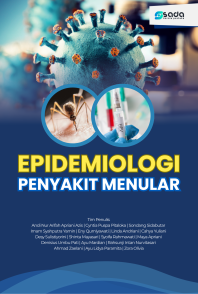
Epidemiologi Penyakit Menular
Keywords:
Epidemiologi , Penyakit, MenularSynopsis
Buku ini disusun sebagai upaya untuk memberikan pemahaman yang komprehensif mengenai ilmu epidemiologi yang difokuskan pada dinamika penyakit menular, yang hingga saat ini masih menjadi tantangan besar dalam kesehatan masyarakat global. Penyakit menular, dengan kemampuannya untuk menyebar dan menimbulkan wabah, memerlukan pendekatan khusus dalam pencegahan dan pengendaliannya. Perubahan lingkungan, perilaku manusia, serta perjalanan internasional yang semakin masif, turut mempercepat transmisi penyakit. Lebih jauh lagi, fenomena seperti resistensi antimikroba dan munculnya patogen baru (emerging infectious diseases) menuntut pemutakhiran pengetahuan secara terus-menerus. Oleh karena itu, pemahaman mendalam tentang epidemiologi penyakit menular menjadi sebuah keniscayaan bagi para akademisi, praktisi kesehatan, dan para pengambil kebijakan. Lebih rinci pembahasan pada buku ini meliputi: (1) Pengantar Epidemiologi Penyakit Menular: Sejarah dan Perkembangan, (2) Konsep Trias Epidemiologi (Agen, Penjamu, dan Lingkungan), (3) Mekanisme Transmisi, (4) Masa Inkubasi, Periode Infeksius, dan Spektrum Penyakit, (5) Ukuran Kejadian Penyakit: Insidensi, Prevalensi, dan Attack Rate, (6) Surveilans Epidemiologi Penyakit Menular dan Deteksi Dini, (7) Investigasi Wabah dan Kejadian Luar Biasa (KLB), (8) Epidemiologi Penyakit Saluran Pernapasan, (9) Epidemiologi Penyakit Saluran Pencernaan, (10) Epidemiologi Penyakit Menular Seksual, (11) Epidemiologi Penyakit Tular Vektor, (12) Epidemiologi Penyakit Zoonosis, (13) Pencegahan, Penanggulangan, dan Teknologi, (14) Imunisasi dan Vaksinologi, (15) Strategi Pencegahan: Isolasi, Karantina, dan Desinfeksi, (16) Peran Laboratorium Mikrobiologi dalam Diagnosa Epidemiologis, (17) Farmakoepidemiologi dan Fenomena Resistensi Antimikroba (AMR).
Downloads
Download data is not yet available.
References
Anjaswanti, R. N., Azizah, R., & Leonita, A. (2022). Studi Meta-Analisis: Faktor Risiko Kejadian Pneumonia Pada Balita Di Indonesia Tahun 2016-2021. Journal of Community Mental Health and Public Policy, 4(2), 56–70. https://doi.org/10.51602/cmhp.v4i2.65
Bhatt, S., Gething, P. W., Brady, O. J., Messina, J. P., Farlow, A. W., Moyes, C. L., Drake, J. M., Brownstein, J. S., Hoen, A. G., Sankoh, O., Myers, M. F., George, D. B., Jaenisch, T., Wint, G. R. W., Simmons, C. P., Scott, T. W., Farrar, J. J., & Hay, S. I. (2013). The global distribution and burden of Dengue. Nature, 496(7446), 504–507. https://doi.org/10.1038/nature12060
CDC. (2025, September 19). Dengue. Yellow Book. https://www.cdc.gov/yellow-book/hcp/travel-associated-infections-diseases/Dengue.html
European Centre for Disease Prevention and Control. (2025). Deferral criteria and testing strategies for Dengue virus in blood donors returning from affected areas: Survey results. Publications Office. https://doi.org/10.2900/4266554
Giesecke, J. (2017a). Modern Infectious Disease Epidemiology (3rd ed.). CRC Press. https://lccn.loc.gov/2016042511
Giesecke, J. (2017b). Modern infectious disease epidemiology: Third edition. Dalam Modern Infectious Disease Epidemiology: Third Edition (hlm. 233). https://doi.org/10.1201/9781315222714
Haider, N., Hasan, M. N., Onyango, J., Billah, M., Khan, S., Papakonstantinou, D., Paudyal, P., & Asaduzzaman, M. (2025). The global Dengue epidemic worsens, with a record 14 million cases and 9000 deaths reported in 2024. International Journal of Infectious Diseases, 158, 107940. https://doi.org/10.1016/j.ijid.2025.107940
Hasyim, H., Ihram, M. A., Fakhriyatiningrum, Misnaniarti, Idris, H., Liberty, I. A., Flora, R., Zulkifli, H., Tessema, Z. T., Maharani, F. E., Syafrudin, D., & Dale, P. (2023). Environmental determinants and risk behavior in the case of indigenous malaria in Muara Enim Regency, Indonesia: A case-control design. PLOS ONE, 18(8), e0289354. https://doi.org/10.1371/journal.pone.0289354
Heuschen, A.-K., Abdul-Mumin, A., Abubakari, A., Agbozo, F., Lu, G., Jahn, A., & Müller, O. (2023). Effects of the COVID-19 pandemic on general health and malaria control in Ghana: A qualitative study with mothers and health care professionals. Malaria Journal, 22, 78. https://doi.org/10.1186/s12936-023-04513-6
Hossain, T., Chayan, F. U., Iqbal, H., Alam, F., & Syrmos, N. (2025). Situation Report of Clinical and Climatic Pattern Changes in Dengue Outbreaks in Bangladesh 2024–2025. Journal of Current Health Sciences, 5(4), 231–240. https://doi.org/10.47679/jchs.2025137
Jarona, M. M., Purba, E. R. V., & Purba, L. I. N. (2025). Malaria Risk Analysis on Stunting Incidence in Toddlers. Indonesian Journal of Global Health Research, 7(4), 131–136. https://doi.org/10.37287/ijghr.v7i4.6322
Maineny, A., Longulo, O. J., & Endang, N. (2022). Hubungan Riwayat Penyakit Infeksi Dengan Kejadian Stunting Pada Balita Umur 24-59 Bulan Di Wilayah Kerja Puskesmas Marawola Kabupaten Sigi: History of Infectious Diseases with Stunting Incidence among Toddlers Age 24-59 Months at the Marawola Health Center, Sigi Regency. Jurnal Bidan Cerdas, 4(1), 10–17. https://doi.org/10.33860/jbc.v4i1.758
Muharani, F., Febriany, S. E., Rahmawati, S. D., Yamin, I. S., Mahwati, Y., & Wisastra, D. P. (2026). Rapid Response to Underweight: Effectiveness of a Short-Term Community-Based Intensive Nutritional Intervention. Jurnal Epidemiologi Kesehatan Komunitas, 11(1), 30–37. https://doi.org/10.14710/jekk.v11i1.30548
Murrieta, R. A., Garcia-Luna, S. M., Murrieta, D. J., Halladay, G., Young, M. C., Fauver, J. R., Gendernalik, A., Weger-Lucarelli, J., Rückert, C., & Ebel, G. D. (2021). Impact of extrinsic incubation temperature on natural selection during Zika virus infection of Aedes aegypti and Aedes albopictus. PLOS Pathogens, 17(11), e1009433. https://doi.org/10.1371/journal.ppat.1009433
Popang, C. T., Isnaini, Y. S., Mulyanti, & Ester. (2025). The Nutritional Status Of Toddlers Is A Risk Factor For Malaria Incidence At Kimi Health Center. International Journal of Health and Medicine, 2(1), 126–138. https://doi.org/10.62951/ijhm.v2i1.217
Sasmono, R. T., Santoso, M. S., Pamai, Y. W. B., Yohan, B., Afida, A. M., Denis, D., Hutagalung, I. A., Johar, E., Hayati, R. F., Yudhaputri, F. A., Haryanto, S., Stubbs, S. C. B., Blacklaws, B. A., Myint, K. S. A., & Frost, S. D. W. (2020). Distinct Dengue Disease Epidemiology, Clinical, and Diagnosis Features in Western, Central, and Eastern Regions of Indonesia, 2017–2019. Frontiers in Medicine, 7. https://doi.org/10.3389/fmed.2020.582235
Suratri, M. A. L., Indriasih, E., Warouw, T. S., Edwin, V. A., Yulianto, A., Faizal, D. R., Deva, N. M. S., Yulianti, A., Agus, T. P., Pracoyo, N. E., & Raharni, R. (2025). The Relationship between Infectious Diseases and Stunting among Toddlers in Indonesia. Iranian Journal of Nursing and Midwifery Research, 30(6), 936–940. https://doi.org/10.4103/ijnmr.ijnmr_87_24
Tanjung, N. U., & Nazara, E. N. (2023). Hubungan Asupan Gizi Makro dan Riwayat Infeksi Dengan Malnutrisi Pada Balita di Puskesmas Lotu. Jurnal Ilmiah Kesehatan Masyarakat: Media Komunikasi Komunitas Kesehatan Masyarakat, 15(1), 23–28. https://doi.org/10.52022/jikm.v15i1.431
Ulgheri, F. M., Bernardes, B. G., & Lancellotti, M. (2025). Decoding Dengue: A Global Perspective, History, Role, and Challenges. Pathogens, 14(9). https://doi.org/10.3390/pathogens14090954
WHO. (2024). World Malaria Report 2024. https://www.who.int/publications/i/item/9789240104440
WHO. (2025a). Dengue. World Health Organization. Dengue. https://www.who.int/news-room/fact-sheets/detail/Dengue-and-severe-Dengue
WHO. (2025b). Dengue: Global situation, surveillance, and progress—2024 update. https://www.who.int/publications/i/item/who-wer10052-665-678
Winokur, O. C., Main, B. J., Nicholson, J., & Barker, C. M. (2020). Impact of temperature on the extrinsic incubation period of Zika virus in Aedes aegypti. PLoS Neglected Tropical Diseases, 14(3), e0008047. https://doi.org/10.1371/journal.pntd.0008047
Yamin, I. S., & Rahmawati, S. D. (2026). Epidemiological Study of Wasting Among Children Under Five in Coastal Areas: An Analysis of Food Security and Dietary Quality. JURNAL KESEHATAN TROPIS INDONESIA, 4(1), 1–8. https://doi.org/10.63265/jkti.v4i1.175
Yamin, I. S., Rahmawati, S. D., & Furqan, B. R. N. (2026). The Differential Effect of Community-Based Supplementary Feeding on Wasting and Stunting: Epidemiological Evidence from an Endemic Region in West Nusa Tenggara. JURNAL KESEHATAN TROPIS INDONESIA, 4(1), 9–17. https://doi.org/10.63265/jkti.v4i1.178
Zhang, W.-X., Zhao, T.-Y., Wang, C.-C., He, Y., Lu, H.-Z., Zhang, H.-T., Wang, L.-M., Zhang, M., Li, C.-X., & Deng, S.-Q. (2025). Assessing the global Dengue burden: Incidence, mortality, and disability trends over three decades. PLOS Neglected Tropical Diseases, 19(3), e0012932. https://doi.org/10.1371/journal.pntd.0012932
Published
April 6, 2026
Copyright (c) 2026 Sada Kurnia Pustaka
License

This work is licensed under a Creative Commons Attribution-NonCommercial 4.0 International License.
Details about the available publication format: PDF
PDF