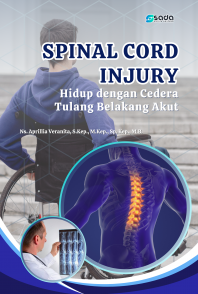
Spinal Cord Injury: Hidup dengan Cedera Tulang Belakang Akut
Keywords:
Spinal , Cord, InjurySynopsis
Buku ini menghadirkan pencerahan dan panduan bagi mereka yang mengalami cedera tulang belakang akut. Dengan fokus pada aspek-aspek medis, rehabilitasi, dan kehidupan sehari-hari, buku ini menjadi penuntun yang berharga bagi individu yang menghadapi tantangan setelah mengalami cedera tulang belakang. Materi yang dibahas dalam buku ini meliputi: Traumatic Spinal Cord Injury, Revaskularisasi Setelah Trauma SCI, Gangguan Kontrol Usus (Bowel Control), Disfungsi Usus Neurogenik (Neurogenic Bowel Dysfunction), Cedera Di Level Zona Atas Saraf Sakral, Dampak Psikososial Cedera Tulang Belakang, Gangguan Suasana Hati, Saat Kembali Ke Rumah, Belajar Menyesuaikan Diri, Belajar Mandiri dan Perubahan Peran, Mungkinkah Dapat Sembuh Total Setelah SCI dan Kualitas Hidup 1-5 Tahun Setelah Cedera. Buku ini tidak hanya memberikan informasi praktis tentang manajemen cedera tulang belakang tetapi juga menciptakan narasi penuh harapan dan kesempatan untuk kehidupan yang bermakna setelah mengalami cedera tulang belakang akut. Dengan pendekatan yang holistik, buku ini menjadi panduan yang komprehensif untuk individu dan keluarga yang menjalani perjalanan penyembuhan dari cedera tulang belakang.
Downloads
Download data is not yet available.
References
Aikman, K., Oliffe, J. L., Kelly, M. T., & McCuaig, F. (2018). Sexual Health in Men With Traumatic Spinal Cord Injuries: A Review and Recommendations for Primary Health-Care Providers. American Journal of Men’s Health, 12(6), 2044–2054. https://doi.org/10.1177/1557988318790883
Angel, S., & Kroll, T. (2020). Sex Life During the First 10 Years After Spinal Cord Injury: A Qualitative Exploration. Sexuality and Disability, 38(1), 107–121. https://doi.org/10.1007/s11195-020-09620-9
Anker, S. D., Agewall, S., Borggrefe, M., Calvert, M., Caro, J. J., Cowie, M. R., Ford, I., Paty, J. A., Riley, J. P., Swedberg, K., Tavazzi, L., Wiklund, I., & Kirchhof, P. (2014). The importance of patient-reported outcomes: A call for their comprehensive integration in cardiovascular clinical trials. European Heart Journal, 35(30), 2001–2009. https://doi.org/10.1093/eurheartj/ehu205
APAPsycNet. (2021). Adaptation during spinal cord injury rehabilitation: the role of appraisal and coping [press release]. US: American Psychological Association.
Arguello, D., & , Kali S. Thomas, P. D. H. B. L. M. M. G. E.-L. M. (2017). 乳鼠心肌提取 HHS Public Access. Physiology & Behavior, 176(1), 139–148. https://doi.org/10.20517/2347-8659.2019.15.Economic
Barraud, E. (2023). New implant offers promise for the paralyzed. EPFL. https://actu.epfl.ch/news/new-implant-offers-promise-for-the-paralyzed/
Babar, I., Musa, M., Ali, b., Farooqe, U., Hussain, A., & Rehman, U. (2022). Level of physical activity and its association with depression among chronic spinal cord injury patients at a paraplegic centre in Peshawar. IBEROAMERICAN JOURNAL OF MEDICINE , vol.4, n4, p.206-211,http://dx.doi.org/10.53986/ibjm.2022.0037.
Bell, B. (2019). Hope for Spinal Cord Injury Treatment. https://enablingdevices.com/blog/hope-for-spinal-cord-injury-treatment/
Blanke, G. M. H. and E. N. (2019). Gastrointestinal dysfunction after spinal cord injury. Exp Neurol, 320. https://doi.org/doi: 10.1016/j.expneurol.2019.113009
Bombardier, C. H. (2023). Part of the Hot Topics Series: Managing Bowel Function After Spinal Cord Injury: Depression and Spinal Cord Injury. https://msktc.org/sci/factsheets/depression-and-spinal-cord-injury
Bonnet, M., Alluin, O., Trimaille, T., Gigmes, D., Marqueste, T., & Decherchi, P. (2020). Delayed Injection of a Physically Cross-Linked PNIPAAm- g-PEG Hydrogel in Rat Contused Spinal Cord Improves Functional Recovery. ACS Omega, 5(18), 10247–10259. https://doi.org/10.1021/acsomega.9b03611
Börchers, S. (2018). Pain in the Brain? https://biologista.org/2018/08/28/pain-in-the-brain-askmybrain/
Budd, M. A., Gater, D. R., & Channell, I. (2022). Psychosocial Consequences of Spinal Cord Injury: A Narrative Review. Journal of Personalized Medicine, 12(7). https://doi.org/10.3390/jpm12071178
CDC. (2023, April 20). Traumatic Brain Injury & Concussion. Centers for Disease Control and Prevention, National Center for Injury Prevention and Control. https://www.cdc.gov/traumaticbraininjury/index.html.
Carolyn E. Schwartz , Brian Stucky , Carly S. Rivers , Vanessa K. Noonan, J. A. F. (2018). Quality of Life and Adaptation in People With Spinal Cord Injury: Response Shift Effects From 1 to 5 Years Postinjury. ScienceDirect, 99(8), 1599-1608.e1. https://doi.org/https://doi.org/10.1016/j.apmr.2018.01.028
Charlifue, S. B., Botticello, A., Kolakowsky-Hayner, S. A., Richards, J. S., & Tulsky, D. S. (2016). Family caregivers of individuals with spinal cord injury: Exploring the stresses and benefits. Spinal Cord, 54(9), 732–736. https://doi.org/10.1038/sc.2016.25
Cherry, K. (2023). What Is a Schema in Psychology? Verywell Mind. https://www.verywellmind.com/what-is-a-schema-2795873.
Cherry, K. (2022). Piaget's 4 Stages of Cognitive Development Explained,Background and Key Concepts of Piaget's Theory. Verywell mind. https://www.verywellmind.com/piagets-stages-of-cognitive-development-2795457.
Cherry, K. (2022). DEVELOPMENTAL PSYCHOLOGY; What Is Assimilation in Psychology? The Importance of Assimilation in Adaptation and Learning. https://www.verywellmind.com/what-is-assimilation-2794821.
Chu Eric C. P; Linda Y. K. Lee. (2021). Cervicogenic dysphagia associated with cervical spondylosis: A case report and brief review. J Family Med Prim Care., 10(9), 3490–3493. https://doi.org/doi: 10.4103/jfmpc.jfmpc_359_21
Chowdhury, S., & Chakraborty, P. pratim. (2017). Universal health coverage ‑ There is more to it than meets the eye. Journal of Family Medicine and Primary Care, 6(2), 169–170. https://doi.org/10.4103/jfmpc.jfmpc
Conti., Dimonte, V.,, Rizzi, & etal. (2020). Barriers and facilitators of education provided during rehabilitation of people with spinal cord injuries; a qualitative description. PLoS One, 15(10):e0240600. doi:10.1371/journal.pone.0240600.
Cook, M. A. (2024). Breastfeeding with a Spinal Cord Injury;Breastfeeding with a Disability. https://www.nchpad.org/1601/6624/Breastfeeding~with~a~Spinal~Cord~Injury
Craig, A., Tran, Y., Guest, R., & Middleton, J. (2019). Trajectories of Self-Efficacy and Depressed Mood and Their Relationship in the First 12 Months Following Spinal Cord Injury. Archives of Physical Medicine and Rehabilitation, 100(3), 441–447. https://doi.org/10.1016/j.apmr.2018.07.442
Craig A., Tran Y., & J, M. (2017). Theory of adjustment following severe neurological injury: evidence supporting the spinal cord injury adjustment model. In: Costa A, Villalba E, editors. Horizons in Neuroscience Research., Vol. 29. New York: Nova Science Publishers117–139.
Craig A., Tran Y., Siddall P., & al., e. (2013). Developing a model of associations between chronic pain, depressive mood, chronic fatigue, and self-efficacyin people with spinal cord injury. J Pain, 14(9):911–920.
de Jonge D, Scherer M, R. S. (2007). Assistive technology in the workplace.
Dick, S., Thomas, J., McMillan, J., Davis, K., & Miles, A. (2020). Swallowing rehabilitation following spinal injury: A case series. J Spinal Cord Med., 45(1): 65–75. doi: 10.1080/10790268.2020.1762828.
DiMarco, A. F., Geertman, R. T., Tabbaa, K., & Kowalski, K. E. (2019). Complete restoration of respiratory muscle function in three subjects with spinal cord injury: Pilot interventional clinical trial. American Journal of Physical Medicine and Rehabilitation, 98(1), 43–50. https://doi.org/10.1097/PHM.0000000000001018
Dorsett, P., Geraghty, T., Sinnott, A., & Acland, R. (2017). Hope, coping and psychosocial adjustment after spinal cord injury. Spinal Cord Ser Cases., 3: 17046., doi: 10.1038/scsandc.2017.46.
Dorsett P. (2010). The importance of hope in coping with severe acquired disability. Aust Social Work , 63: 83–102.
Drugwatch. (2023). Pulmonary Embolism. https://www.drugwatch.com/health/cardiovascular-health/pulmonary-embolism/
Dyck DG., Weeks DL., Smith CL., & Shaw M. (2021). Multiple family group intervention for spinal cord injury: quantitative and qualitative comparison with standard education. J Spinal Cord Med. 2021, 44(4):572–582. doi:10.1080/10790268.2019.1710946.
D. Kathnelson, J., Kurtz Landy, C. M., S. Ditor, D., Tamim, H., & H. Gage, W. (2020). Examining the psychological and emotional experience of sexuality for men after spinal cord injury. Cogent Psychology, 7(1). https://doi.org/10.1080/23311908.2020.1722355
Drugwatch. (2023). Pulmonary Embolism. https://www.drugwatch.com/health/cardiovascular-health/pulmonary-embolism/
Engblom-Deglmann, M. L., & Hamilton, J. (2020). The Impact of Spinal Cord Injury on the Couple Relationship: A Grounded Theory Exploration of the Adjustment Process. Journal of Couple and Relationship Therapy, 19(3), 250–275. https://doi.org/10.1080/15332691.2020.1746459
Farkas, G. J., Sneij, A., McMillan, D. W., Tiozzo, E., Nash, M. S., & Gater, D. R. (2022). Energy expenditure and nutrient intake after spinal cord injury: A comprehensive review and practical recommendations. British Journal of Nutrition, 128(5), 863–887. https://doi.org/10.1017/S0007114521003822
Flint Rehab, & Denslow, E. (2021). Bowel Program for Spinal Cord Injury: How to Regain Control. FlintRehab, Tool to spark recovery. https://www.flintrehab.com/bowel-program-for-spinal-cord-injury/.
Gater, D. R. (2020). Neurogenic bowel and bladder evaluation strategies in spinal cord injury: New directions. Journal of Spinal Cord Medicine, 43(2), 139–140. https://doi.org/10.1080/10790268.2020.1718469
Galvin LR., & HPD., G. (2001). The impact of coping on emotional adjustment to spinal cord injury (SCI): review of the literature and application ofa stress appraisal and coping formulation. . Spinal Cord, ;39(12):615–627. doi:10.1038/sj.sc.3101221.
Gendreau A., & de la Sablonnière R. (2014). The cognitive process of identity reconstruction after the onset of a neurological disability. Disability and Rehabilitation , Volume 36, 2014 - Issue 19, https://doi.org/10.3109/09638288.2013.859749
Gianna M. Rodriguez. (2023). Model Systems Knowledge Translation Center: Bowel Function After Spinal Cord Injury. https://msktc.org/sci/factsheets/bowel-function-after-spinal-cord-injury
Godeschalk-Hertig, A., Gemperli, U., Arnet., & etal. (2018). Availability and need of home adaptations for personal mobility among individuals with spinal cord injury. The Journal of Spinal Cord Medicine, 41(1): 91–101.doi: 10.1080/10790268.2017.1308995.
Goetz, L. L., Ottomanelli, L., Barnett, S. D., Sutton, B., & Njoh, E. (2018). Relationship between comorbidities and employment among veterans with spinal cord injury. Topics in Spinal Cord Injury Rehabilitation, 24(1), 44–53. https://doi.org/10.1310/sci16-00047
Gronski, S. (2022). How Spinal Cord Injuries Cause Bladder Problems. Aeroflow Urology Redefining Continence Care. https://aeroflowurology.com/blog/how-spinal-cord-injuries-cause-bladder-problems.
Gross-Hemmi., M., M. W., Ehrmann, C., Fekete, C., Hasnan, N., & etal. (2017). Study Protocol of the International Spinal Cord Injury (InSCI) Community Survey. American Journal of Physical Medicine & Rehabilitation, Volume 96, Number 2 (Suppl), DOI: 10.1097/PHM.0000000000000647.
Hadjipavlou, G., Cortese, M., & Ramaswamy, B. (2016). Spinal cord injury and chronic pain. BJA Education, Pages 264–268,https://doi.org/10.1093/bjaed/mkv073
Han, Z., Choi, J., & Ko, J. (2015). Dermatological problems following spinal cord injury in Korean patients. The Journal of Spinal Cord Medicine, 38(1): 63–67.doi: 10.1179/2045772313Y.0000000154.
Holmes, G., & and Blanke, E. N. (2019). Gastrointestinal dysfunction after spinal cord injury. Exp Neurol, doi: 10.1016/j.expneurol.2019.113009.
International Medicine. (2023). Everything You Need to Know about Venus Thrombosis. https://theinternationalmedicine.com/everything-you-need-to-know-about-venus-thrombosis/.
Jenkins, H. T., & Cosco, T. D. (2021). Spinal cord injury and aging: an exploration of the interrelatedness between key psychosocial factors contributing to the process of resilience. Health Psychology and Behavioral Medicine, 9(1), 315–321. https://doi.org/10.1080/21642850.2021.1911656
Jeyathevan, G., Cameron, J. I., Craven, B. C., Munce, S. E. P., & Jaglal, S. B. (2019). Re-building relationships after a spinal cord injury: Experiences of family caregivers and care recipients. BMC Neurology, 19(1), 1–13. https://doi.org/10.1186/s12883-019-1347-x
John Anschutz. (2023). Model Systems Knowledge Translation Center: Driving After Spinal Cord Injury. https://msktc.org/sci/factsheets/driving-after-spinal-cord-injury
Jörgensen, S., Hedgren, L., Sundelin, A., & Lexell, J. (2021). Global and domain-specific life satisfaction among older adults with long-term spinal cord injury. Journal of Spinal Cord Medicine, 44(2), 322–330. https://doi.org/10.1080/10790268.2019.1610618
Kathleen Masterson. (2018). A new spinal cord injury treatment is getting patients back on their feet. https://medicalxpress.com/news/2018-09-spinal-cord-injury-treatment-patients.html
Kennedy P., Lude P., Elfström ML., & E., S. (2012). Appraisals, coping and adjustment pre and post SCI rehabilitation: a 2-year follow-up study. Spinal Cord, 50(2):112–118. doi:10.1038/sc.2011.127.
Kennedy, P., Kilvert A., & Hasson L. A. (2016). 21-year longitudinal analysis of impact, coping, and appraisals following spinal cord injury. . Rehabil Psychol , 61: 92–101,doi: 10.1037/rep0000066.
Kennedy, P., & Hasson, L. (2017). The relationship between pain and mood following spinal cord injury. Journal of Spinal Cord Medicine, 40(3), 275–279. https://doi.org/10.1080/10790268.2016.1147680
Kisala, P. A., Tulsky, D. S., Pace, N., Victorson, D., Choi, S. W., & Heinemann, A. W. (2015). Measuring stigma after spinal cord injury: Development and psychometric characteristics of the SCI-QOL Stigma item bank and short form. Journal of Spinal Cord Medicine, 38(3), 386–396. https://doi.org/10.1179/1079026815Z.000000000410
Klebine, P. B. (2022). Adjusting to life after spinal cord injury. Model Systems Knowledge Translation Center (MSKTC). https://msktc.org/sci/factsheets/adjusting_to_life
Krassioukov, A., Eng, J. J., Claxton, G., Sakakibara, B. M., & Shum, S. (2010). Neurogenic bowel management after spinal cord injury: A systematic review of the evidence. Spinal Cord, 48(10), 718–733. https://doi.org/10.1038/sc.2010.14
Lambeck, J. (2023). Hydrotherapy equipment, essential tools for rehabilitation. EWAC Medical. Galileistraat 20, Netherlands: https://www.ewacmedical.com/hydrotherapy-equipment-rehabilitation/.
Lohne, V., & Severinsson, E. (2004). Hope during the first months after acute spinal cord injury. J Adv Nurs, 279-86. doi: 10.1111/j.1365-2648.2004.03099.x.
López, A. (2018 ). [Adaptive behaviour of persons with functional limitation: Housing adaptations in Spain]. Rev Esp Geriatr Gerontol, 53(5):285-292. doi: 10.1016/j.regg.2018.02.009.
O’Connor, R., Connery H., & Cheyne WM. (2000). Hopelessness: the role of depression, future directed thinking and cognitive vulnerability. Psychol Health Med , 5: 155–161. doi: 10.1080/713690188
Marcel Post, L. N. (2005). Quality of life after spinal cord injury. J Neurol Phys Ther, 139–146. https://doi.org/DOI: 10.1097/01.npt.0000282246.08288.67
Mayo Foundation. (2023). Cervical spondylosis. https://www.mayoclinic.org/diseases-conditions/cervical-spondylosis/symptoms-causes/syc-20370787
Mayoclinic. (2022). Locomotor training for spinal cord injury. https://www.mayoclinic.org/tests-procedures/locomotor-training-for-spinal-cord-injury/about/pac-20394608
McRae, J., Morgan, S., Wallace, E., & Miles, A. (2023). Oropharyngeal Dysphagia in Acute Cervical Spinal Cord Injury: A Literature Review. Dysphagia, 38(4), 1025–1038. https://doi.org/10.1007/s00455-022-10535-0
Mentalhealth. (2023). Suicide Prevention. https://www.mentalhealth.va.gov/suicide_prevention/prevention/index.asp
Maher, C. (2023). Full Recovery After Spinal Cord Injury: Is It Possible? FlintRehab. https://www.flintrehab.com/full-recovery-spinal-cord-injury/.
May L., Day R., & S., W. ( 2006). Evaluation of patient education in spinal cord injury rehabilitation: knowledge, problem-solving and perceived. importance. Dis Rehabil., 28(7):405–413. doi:10.1080/09638280500192439.
May L., Day R., & S., W. (2006). Perceptions of patient education in spinal cord injury rehabilitation. Dis Rehabil, 28(17):1041–1049. doi:10.1080/09638280500494744
MSKTC. (2023). Model Systems Knowledge Translation Center: Bowel Function After Spinal Cord Injury. https://msktc.org/sci/factsheets/bowel-function-after-spinal-cord-injury
Michele L. Wagner, J. A. S. M. S. (2007). Spinal Cord Injury A Guide for Patient. https://www.healthcare.uiowa.edu/marcom/uihc/orthopedics/spinal-cord-injury.pdf
Mugisa, R., Kironde, E. L., & Mwaka, E. S. (2023). Quality of life of patients with traumatic spinal cord injuries: a cross-sectional study at a tertiary hospital in Uganda. African Health Sciences, 23(3), 521–533. https://doi.org/10.4314/ahs.v23i3.60
Nature Medicine. (2022). Activity-dependent spinal cord neuromodulation rapidly restores trunk and leg motor functions after complete paralysis,. https://doi.org/DOI: https://doi.org/10.1038/s41591-021-01663-5
Norin, L., Slaug, B., Haak, M., & Iwarsson, S. (2021). Housing adaptations and housing accessibility problems among older adults with long-standing spinal cord injury. British Journal of Occupational Therapy, Vol. 84(12) 765–774, DOI: 10.1177/0308022620979516.
NHS. (2023). Dysphagia (swallowing problems). https://www.nhsinform.scot/illnesses-and-conditions/stomach-liver-and-gastrointestinal-tract/dysphagia-swallowing-problems/#:~:text=Dysphagia is the medical term,choking when eating or drinking
Okano, I., Omata, J., Hoshino, Y., Usui, Y., Toyone, T., & Inagaki, K. (2020). Chronic dysphagia caused by Laryngo-vertebral Synostosis after anterior fusion for cervical spine trauma: A case report. BMC Musculoskeletal Disorders, 21(1), 4–9. https://doi.org/10.1186/s12891-020-3152-5
O’Connor, R., Connery H., & Cheyne WM. (2000). Hopelessness: the role of depression, future directed thinking and cognitive vulnerability. Psychol Health Med , 5: 155–161. doi: 10.1080/713690188
Osterthun, R., Tjalma, T. A., Spijkerman, D. C. M., Faber, W. X. M., van Asbeck, F. W. A., Adriaansen, J. J. E., & Post, M. W. M. (2020). Functional independence of persons with long-standing motor complete spinal cord injury in the Netherlands. Journal of Spinal Cord Medicine, 43(3), 380–387. https://doi.org/10.1080/10790268.2018.1504427
Pettersson C., Slaug B., & Granbom M. (2018). Housing accessibility for senior citizens in Sweden: Estimation of the effects of targeted elimination of environmental barriers. Scandinavian Journal of Occupational Therapy, 25(6):407–418, doi: 10.1080/11038128.2017.1280078.
Pitts, T., Iceman, K. E., Huff, A., Musselwhite, M. N., Frazure, M. L., Young, K. C., Greene, C. L., & Howland, D. R. (2022). Laryngeal and swallow dysregulation following acute cervical spinal cord injury. Journal of Neurophysiology, 128(2), 405–417. https://doi.org/10.1152/jn.00469.2021
Previnaire, J. G. (2018). The importance of the bulbocavernosus reflex. Spinal Cord Series and Cases, 4(1), 2–3. https://doi.org/10.1038/s41394-017-0012-0
Saia, T. (2021). Identity reconstruction following neurological disability onset. Rehabil Professional, ;29:2.
Sandalic, D., Arora, M., Pozzato, i., & etal. (2022). A Narrative Review of Research on Adjustment to Spinal Cord Injury and Mental Health: Gaps, Future Directions, and Practice Recommendations. Psychology Research and Behavior Management , 15 1997–2010 , https://www.dovepress.com/getfile.php?fileID=82741.
Sanderson, C. A. (2022). Jean Piaget’s Theory of Cognitive Development. Psychology-Wondrium Daily. https://www.wondriumdaily.com/jean-piagets-theory-of-cognitive-development/.
Santana, L., Martins, E., Bor Lobato, g., & etal. (2022). Neuromuscular disorders in women and men with spinal cord injury are associated with changes in muscle and tendon architecture. J Spinal Cord Med, 23;1-11. doi: 10.1080/10790268.2022.2035619.
Scherer, M. J., & Dicowden, M. A. (2008). Organizing future research and intervention efforts on the impact and effects of gender differences on disability and rehabilitation: The usefulness of the International Classification of Functioning, Disability and Health (ICF). Disability and Rehabilitation, 30(3), 161–165. https://doi.org/10.1080/09638280701532292
Schwartz, E., Stucky, B., Rivers, C., Noonan, V. K., & Finkelstein, A. ( 2018). Quality of Life and Adaptation in People With Spinal Cord Injury: Response Shift Effects From 1 to 5 Years Postinjury. Archives of Physical Medicine and Rehabilitation, Volume 99, Issue , Pages 1599-1608.e1,https://doi.org/10.1016/j.apmr.2018.01.028.
Scott, K. M., Lim, C., Al-Hamzawi, A., Alonso, J., Bruffaerts, R., Caldas-De-Almeida, J. M., Florescu, S., De Girolamo, G., Hu, C., De Jonge, P., Kawakami, N., Medina-Mora, M. E., Moskalewicz, J., Navarro-Mateu, F., O’Neill, S., Piazza, M., Posada-Villa, J., Torres, Y., & Kessler, R. C. (2016). Association of mental disorders with subsequent chronic physical conditions: World mental health surveys from 17 countries. JAMA Psychiatry, 73(2), 150–158. https://doi.org/10.1001/jamapsychiatry.2015.2688
Sem, K., Castillo, K., Wong, S., & Chang, J. (2011). Disfagia pada individu dengan tetraplegia: kejadian dan faktor risiko. J Tulang Belakang Med, 34(1): 85–92. doi: 10.1179/107902610X12911165974981.
Seymour, L. (2022). Traumatic Brain and Spinal Cord Injury. Health, Departmen of Health. https://www.health.state.mn.us/communities/tbi/index.html.
Shepherd Center. (2023). Spinal Rehabilitation Center: Injury and Paralysis Information. https://www.shepherd.org/patient-programs/spinal-cord-injury/about#:~:text=With many spinal cord injuries,functioning years after the injury.
Spinal pedia. (2023). Short-Term and Long-Term Bathroom Fixes/Renovations. Learning portal, https://spinalpedia.com/learning-portals/short-term-and-long-term-bathroom-fixes-renovations/?_=1678408379.
Shepherd Center. (2023). Spinal Rehabilitation Center: Injury and Paralysis Information. https://www.shepherd.org/patient-programs/spinal-cord-injury/about#:~:text=With many spinal cord injuries,functioning years after the injury.
Simpson, B., Villeneuve, M., & Clifton, S. (2021). Exploring well-being services from the perspective of people with SCI: A scoping review of qualitative research. International Journal of Qualitative Studies on Health and Well-Being, 16(1). https://doi.org/10.1080/17482631.2021.1986922
Stanciu, L. E., Iliescu,Gabriela,Madalina, Vlădăreanu, L., & etal. (2023). Evidence of Improvement of Lower Limb Functioning Using. biomedicines, 11(2), 302; https://doi.org/10.3390/biomedicines11020302.
Stoffel, J. T., Van der Aa, F., Wittmann, D., Yande, S., & Elliott, S. (2018). Fertility and sexuality in the spinal cord injury patient. World Journal of Urology, 36(10), 1577–1585. https://doi.org/10.1007/s00345-018-2347-y
Tabor-Gray, L. C., Gallestagui, A., Vasilopoulos, T., & Plowman, E. K. (2019). Characteristics of impaired voluntary cough function in individuals with amyotrophic lateral sclerosis. Amyotrophic Lateral Sclerosis and Frontotemporal Degeneration, 20(1–2), 37–42. https://doi.org/10.1080/21678421.2018.1510011
Tough, H., Gross-Hemmi, M., Eriks-Hoogland, I., & Fekete, C. (2021). Pathways to loneliness: a mediation analysis investigating the social gradient of loneliness in persons with disabilities in Switzerland. International Journal for Equity in Health, 20(1), 1–11. https://doi.org/10.1186/s12939-021-01600-5
UIHC. (2023). How do spinal cord injuries affect the body? University of Iowa Hospitals & Clinics. https://uihc.org/educational-resources/how-do-spinal-cord-injuries-affect-body.
Van, D. T., IJW., V. N., Van Laake, G. C., & etal. (2021). Learning self-care skills after spinal cord injury: a qualitative study. BMC Psychol., 155 (2021). https://doi.org/10.1186/s40359-021-00659-7.
Vickeri Barton and Susie Kim. (2011). Everyday Nutrition for Individuals with Spinal Cord Injury. https://sci.washington.edu/info/forums/reports/nutrition_2011.asp#report
Vish Gain. (2023). Swiss researchers develop tech to help person with paralysis walk again. https://www.siliconrepublic.com/innovation/neurorestore-paralysis-walking-technology-brain-spine-interface-digital-bridge
Wallace, S., & McGrath, B. A. (2021). Laryngeal complications after tracheal intubation and tracheostomy. BJA Education, 21(7), 250–257. https://doi.org/10.1016/j.bjae.2021.02.005
Wan, D., & Krassioukov, A. V. (2014). Life-threatening outcomes associated with autonomic dysreflexia: A clinical review. Journal of Spinal Cord Medicine, 37(1), 2–10. https://doi.org/10.1179/2045772313Y.0000000098
Weber, L., Voldsgaard, N. H., Holm, N. J., Schou, L. H., Biering-Sørensen, F., & Møller, T. (2021). Exploring the contextual transition from spinal cord injury rehabilitation to the home environment: a qualitative study. Spinal Cord, 59(3), 336–346. https://doi.org/10.1038/s41393-020-00608-y
Kennedy, P., & Hasson, L. (2017). The relationship between pain and mood following spinal cord injury. Journal of Spinal Cord Medicine, 40(3), 275–279. https://doi.org/10.1080/10790268.2016.1147680
Wolters Kluwer. (2024). Calculator: Depression screening by a nine-item Patient Health Questionnaire (PHQ-9) in adults. https://www.uptodate.com/contents/calculator-depression-screening-by-a-nine-item-patient-health-questionnaire-phq-9-in-adults
Wegner, S., Thomas, P., & James, C. (2017). Hydrotherapy for the long-term ventilated patient: A case study and implications for practice. Science Direct, Volume 30, Issue 6, November 2017, Pages 328-331,https://doi.org/10.1016/j.aucc.2017.01.001.
Yao, C., Cao, X., & Yu, B. (2021). Revascularization After Traumatic Spinal Cord Injury. Frontiers in Physiology, 12(April), 1–9. https://doi.org/10.3389/fphys.2021.631500
Zizzo, J., Gater, D. R., Hough, S., & Ibrahim, E. (2022). Sexuality, Intimacy, and Reproductive Health after Spinal Cord Injury. Journal of Personalized Medicine, doi: 10.3390/jpm12121985
Published
February 24, 2024
Categories
Copyright (c) 2024 Sada Kurnia Pustaka
License

This work is licensed under a Creative Commons Attribution-NonCommercial 4.0 International License.
Details about the available publication format: PDF
PDF